
Issue
09Photography
Charlie Gray
Words
Elgar Johnson-Forster
Stylist
Alesha Jivanda
Published
Updated
Reading Time
6 Min Read
There is a moment, early in any conversation with Khadija Shaw, where you realise the name “Bunny” is doing a lot of work. It suggests softness, approachability, a certain lightness. The reality, once you understand the numbers, is somewhat different. 117 goals in 137 appearances for Manchester City. Over 100 WSL goal involvements since joining City. The first Manchester City player – men’s or women’s – to score 100 goals for the club. A third consecutive WSL Golden Boot. A league title. The FWA Women’s Footballer of the Year, for the second time. All of it delivered with the composure of someone who has always known this was coming.

“I grew up in Spanish Town, Jamaica, and football was always around me from a very young age,” she says. “I used to play with the boys in the community and that really helped shape me. I just fell in love with the game naturally.” It is a sentence that sounds almost casual but contains the whole story. Spanish Town is not a place that produces elite professional athletes by accident. It produces them through necessity, hunger, and an absolute refusal to accept the ceiling others set.
Shaw is 29 now, and at the peak of a career that has reordered how we understand goalscoring in the women’s game. The comparison points her own interviewer reaches for – Tiger Woods, Serena Williams, Roger Federer, Lionel Messi – are not idle flattery. They are the correct frame. Every generation produces one or two athletes who make what they do look structurally different from everyone else doing the same thing. Shaw scores goals the way that those names dominated their sports: not just with more frequency, but with a quality that makes the watching feel inevitable.

The season just finished will define her legacy at this club, whatever happens next. City had not won the WSL title for ten years. The scars from 2024, when Shaw herself was injured and watched Chelsea steal the title from the sidelines, had never quite healed. This time, fit and present and ferocious, she made sure there was no doubt. 21 goals in 22 games, the WSL’s fastest hat-trick in league history – a trio in 12 minutes and 37 seconds – and a WSL champions medal that, when you speak to her, feels less like a destination than a staging post.

“There’s still a lot I want to accomplish,” she says. “I want to continue winning trophies, keep improving as a player, and help take Jamaica to even greater heights internationally.” The restraint of that answer is telling. This is not a player who has arrived somewhere. This is a player who has added one item to a long list.

Ask her how her game has evolved since joining City, and the answer is not the one you might expect from a striker with her numbers. She doesn’t talk about finishing. She talks about everything else. “I’ve become more complete, not just scoring goals, but my movement, link-up play, pressing, and decision-making. Being around top players and coaches every day challenges me to improve constantly.” The Golden Boot, three years running, is almost incidental to how she describes her own development.


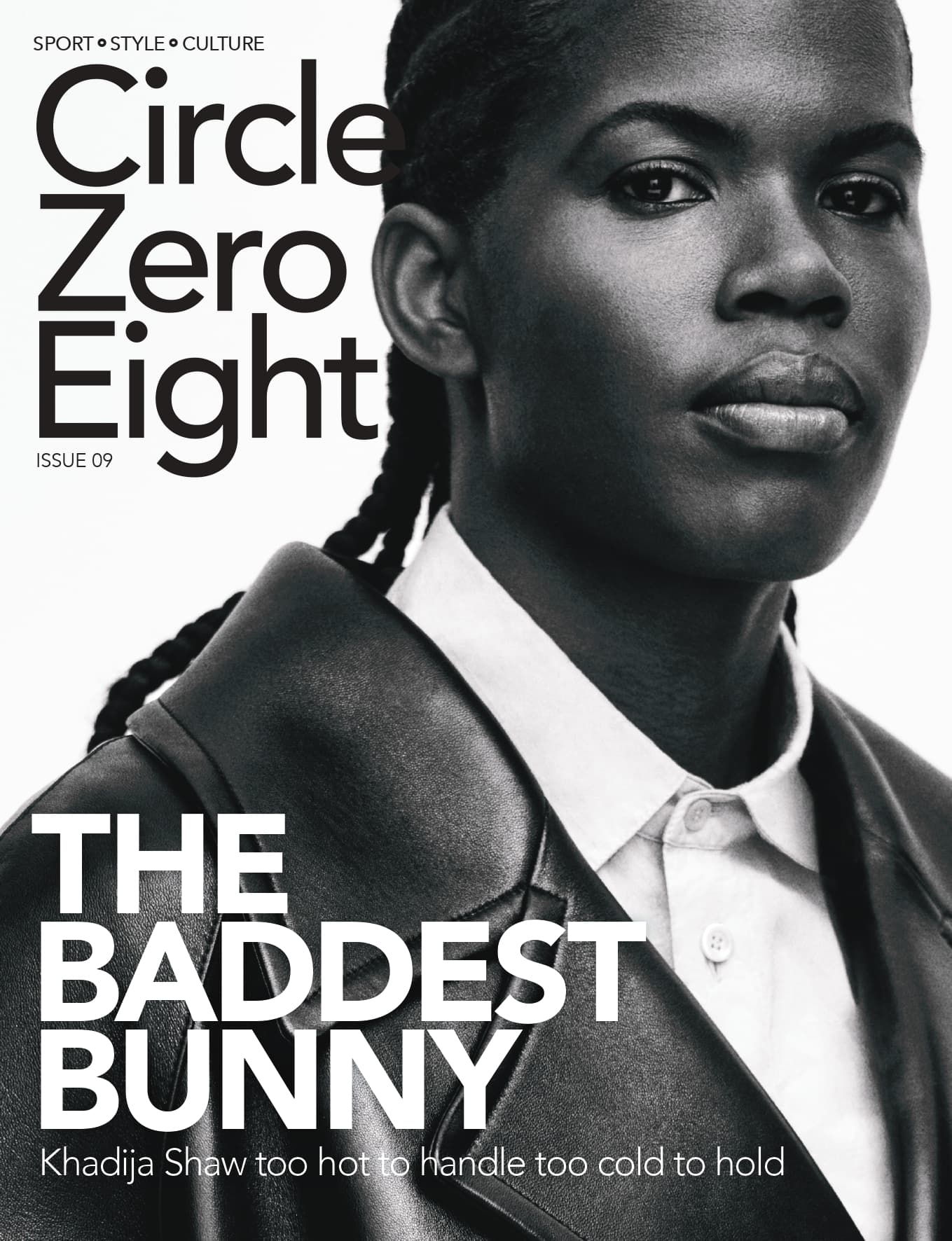
The toughest opponent she has faced? Wendy Renard, the Lyon and France defender, from her time in France. “Every time I came up against her was a challenge.” It is one of the few moments in the conversation where you sense the effort something requires, rather than the ease with which it arrives.
Off the pitch, she is, by her own account, something of a contradiction to the force of nature on it. “Probably that I’m actually a very calm and quiet person off the pitch,” she says, when asked what fans would be surprised to learn. She listens to dancehall, reggae, Afrobeat before matches. If she weren’t a footballer? “Honestly, owning a shoe store.” The funniest person in the City dressing room? Goalkeeper Khiara Keating, without hesitation.

And then there is Jamaica. She returned to the Reggae Girlz national team in November after a year away – hat-trick against Antigua & Barbuda, brace in a comeback win against Nicaragua – and the qualifying campaign for the 2027 World Cup is running through CONCACAF Group B with the kind of momentum that feels earned rather than gifted. The funding disputes with the Jamaica Football Federation have been a long-running and painful story. Shaw does not soften it. “No, I don’t think women’s football in Jamaica gets the support it deserves. There needs to be more investment and support because there’s so much talent. But if the ones in charge don’t see it that way, it will be very difficult, not just now but for years to come also.”
It is the most direct she gets. And it lands like a striker’s finish – clean, certain, no spin. She knows what she wants for the next generation, and she is specific about it: better infrastructure, more youth programmes, stronger development pathways. “Visibility gives young girls belief that their dreams are possible too,” she says. “A lot of young girls grow up without seeing people who look like them succeeding at the highest level.” She is, now, that person. The question of what that responsibility feels like sits in the room. “It means everything to me,” she says. “Every time I wear the jersey I want to make the country proud and inspire young girls across the Caribbean.”
What keeps her grounded, amid the awards and the records and the transfer speculation that has followed her all season? The answer is the same one you hear from all great athletes and almost never quite believe, until you are sitting across from someone and you do. “My family, my faith, and remembering where I come from. Football can change your life, but I never want to lose sight of the people and experiences that shaped me. I’m grateful for everything, but I know there’s always more work to do.”

The FA Cup final is at Wembley at the end of the month, against Brighton. After that, World Cup qualifying. After that, a contract decision that will define where the best striker in women’s football plays her football next. She says her home is in Manchester. The clubs circling her from across Europe will say something different. The only certainty, as it has been for three years now, is the goals.
One word, she says, that her teammates would use to describe her: “Influential”.
It will do.
Khadija Shaw is the FWA Women’s Footballer of the Year 2026


